Can You Install an Awning on My House? A Guide to Mounting on Brick, Siding, and Stucco
For many homeowners in Ottawa, deciding whether to install an awning comes down to one final question: “Can this actually be mounted on my house—safely?”
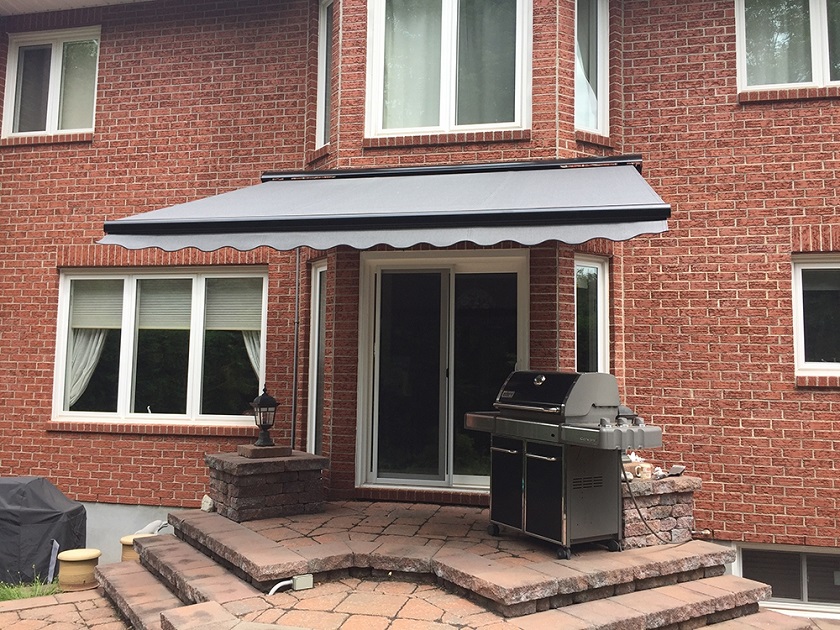
They love the idea of more shade, a cooler patio, and protection from the sun—but worry that their brick, vinyl siding, or stucco exterior can’t handle the load.
The good news? With professional installation, we can safely mount an awning on virtually any home in Ottawa—brick, siding, stucco, and even challenging assemblies like masonry veneer.
This guide walks you through the exact techniques our installers use, why proper mounting hardware matters, and how we ensure every installation meets professional load and safety standards.
The #1 Question We Get: “Can It Be Mounted on MY Wall?”
Short answer: Almost always, yes.
Long answer: Yes—if the awning is anchored directly into structural framing, not just the exterior cladding.
Every retractable awning creates two kinds of forces:
- Shear load (the weight of the awning itself)
- Torsional load (the outward pull as the awning extends)
That means the awning must be tied into solid structural elements—typically the wall studs, rim joist (band board), or roof framing. The exterior finish (brick, vinyl, aluminum, stucco) is not structural on its own on most modern homes.
This is why the core principle of every professional installation is:
Anchor through the exterior cladding and into structural framing—no exceptions.
Let’s break down how this works for the three most common exterior wall types in Ottawa.
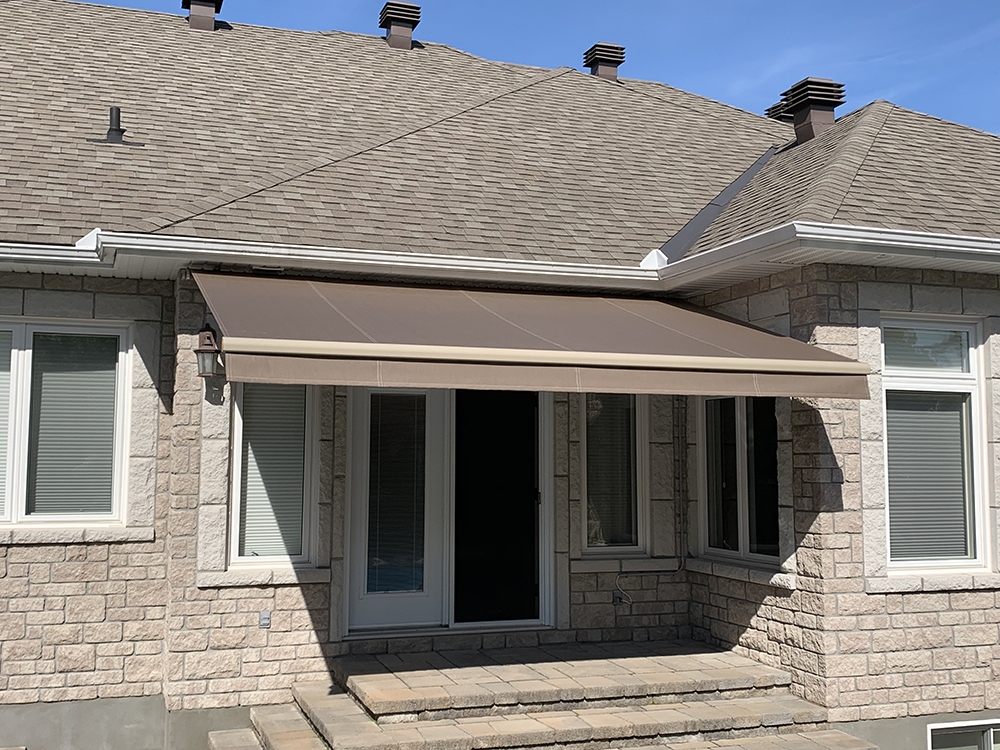
The Gold Standard: Mounting on Solid Framing
Every home—whether brick, siding, or stucco—has a load-bearing structure behind the exterior finish. The goal is to reach:
- 2×6 or 2×4 wood studs behind siding
- Roof trusses through your roof decking or soffit
- Rim joists/band boards at the header area
- Structural blocking added by your installer if needed
This is where specialized awning mounting brackets come in. Our brackets are engineered not just to hold weight, but to disperse and transfer load safely into the home’s framing.
Professional installers use tools like:
- laser levels
- radar wall scanners
- moisture barriers
- high-strength lag or hanger bolts
- load-rated brackets
Following best practices ensures the installation complies with building science principles and that your awning can be securely attached without posing risk to your home.
Solution for Brick or Masonry Veneer
Newer homes in many Ottawa neighbourhoods—Barrhaven, Kanata, Orleans—use brick veneer, meaning the brick is decorative and not structural.
To mount an awning on brick veneer, we:
- Identify the location of the rim joist or structural header behind the brick.
- Drill through the brick (not the mortar).
- Install load-rated hanger bolts or spacers.
- Use awning-specific brackets that transfer load back to the wood structure.
- In some situations where the brick is structural or able to handle the load of an awning, we can mount directly to a brick or stone wall. A site visit is required to determine this and an engineer’s report might be required in certain cases.
This creates a rigid, stable connection between the awning and your home’s structure—not just the veneer layer.
Why Attaching to Mortar Is a Mistake
Mortar is much softer and weaker than brick. Drilling into mortar:
- reduces holding strength
- increases the chance of cracking
- allows water infiltration
- can lead to failure over time
Mortar-based installations are never acceptable for load-bearing attachments like awnings.
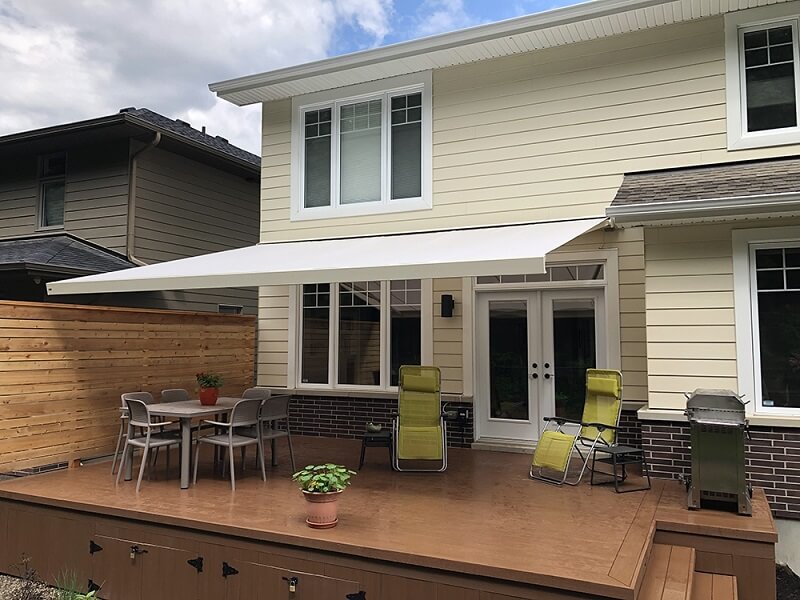
Solution for Vinyl or Aluminum Siding
Many Ottawa homeowners assume siding can’t support an awning—but it absolutely can with the right installation method.
The Importance of Spacers and Mounting Through to the Structure
Vinyl siding is hollow, flexible, and non-structural. To do this properly:
- The siding panel is temporarily removed.
- Installers locate structural studs behind the sheathing and reinstall the siding.
- Brackets are fastened though the siding into the framing using specialized bolts that hold them off the siding
- Waterproofing caulking is applied around penetrations.
This prevents crushing the siding, creating leaks, or leaving the awning unstable. The result is a rock-solid installation that protects the integrity of your building envelope.
Solution for Stucco Walls
Stucco is strong but brittle, and improper installation can lead to cracks or water penetration—especially in Ottawa’s freeze–thaw cycles.
Techniques to Prevent Cracking and Ensure a Secure Hold
For stucco installations, we use:
- pilot drilling through the stucco to avoid cracks
- silicone sealing to maintain water resistance
- lag bolts that reach deep into the structural framing
- spacer blocks and stand-off hanger bolts to prevent uneven pressure on the stucco
Sometimes we’ll remove a small section of stucco to expose sheathing before installing structural blocking. Stucco makes some homeowners nervous, but done properly, an awning can be mounted with zero impact on wall performance. Each house will have its own unique solution.
What If a Wall Mount Isn’t Possible? Roof and Soffit Mounts Explained
When a home’s layout makes wall mounting impractical due to:
- tall windows
- limited wall height
- decorative stone cladding
- obstructions like vents
…we might use alternate methods like:
- Roof Mount Awning – This system uses brackets attached to the roof rafters. A full waterproof flashing kit is applied to prevent leaks, following best-practice roofing standards.
- Soffit Mount – Ideal when the soffit is directly below a structural overhang. Mounting brackets are attached to the house’s trusses, blocking we add, or rafter tails—an extremely stable option.
These alternatives are common in Ottawa’s mix of older heritage homes and newer suburban models.
Why “Who Installs Your Awning” Is More Important Than the Awning Itself
The most common awning failures aren’t caused by the awning.
They’re caused by:
- improper mounting
- wrong bracket selection
- incorrect fasteners
- ignoring load path engineering
- failing to seal penetrations
This is why Jans Awnings provides:
- highly trained installers
- load-aware installation practices
- adherence to building envelope principles
- specialized hardware designed for long-term stability
Our team installs hundreds of awnings across Ottawa every year—on every wall type and in every complexity. With professional installation, your awning will be safe, watertight, and built to last.
Frequently Asked Questions
Ready to Install an Awning? We Can Mount One on Almost Any Home
Whether you live in a charming Centretown brick home or a modern suburban build in Barrhaven or Stittsville, Jans Awnings can safely install your retractable awning on almost any wall surface.
Our expert installers can safely mount an awning on virtually any surface. Schedule a free, no-obligation site assessment!